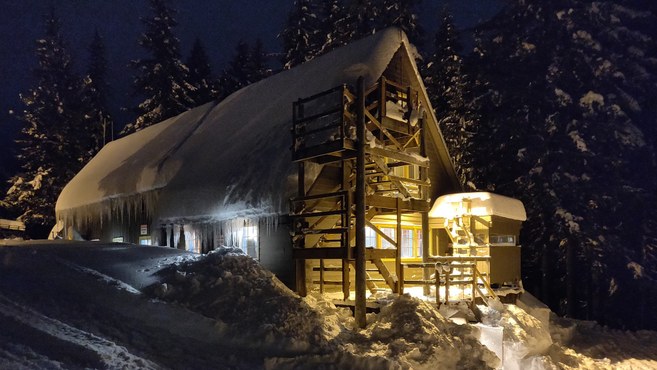
Meany Lodge
Visitors to Meany
Even though the snow has been low, there's been good skiing and riding up at Meany Lodge. With the big dump the week of Jan 9, conditions should be awesome! Meany is open again for winter sports, play, and skiing! See the calendar for dates and details!
Registrations are open for the Meany winter weekends! Seasons Passes are available for purchase (see link below).
Up-hill Travel classes
Looking to get into backcountry skiing? Meany offers a class on up-hill travel to help get you started: Up-Hill Travel Class Offerings
Sign up for Ski, Snowboard, or Telemark Lessons!
Meany offers single-day lessons on Saturdays during the winter season. See the calendar to sign up for a single day's worth of lessons. We offer a series of 4 days of lessons at a reduced price.
"A" Weekends Ski Lessons - Jan 6, Jan 20-21, Feb 3, Mar 2
"B" Weekends Ski Lessons - Jan 13, Jan 27, Feb 10, Feb 24
"B" Weekends Snowboard Lessons - Jan 13, Jan 27, Feb 10, Feb 24
"B" Weekends Telemark Lessons - Jan 13, Jan 27, Feb 10, Feb 24
Meany Lodge on Social Media
Follow the Meany Lodge Facebook page to see photos and videos from our Spring Carnival and winter weekends.
COVID-19 Mitigation Strategies
Our COVID-19 mitigation strategies are described on our Winter Weekends page. For the Winter 2024 season we are requiring all visitors to Meany to show proof of a negative COVID19 home test conducted within 24 hours of arriving at Meany. A cell phone photograph of the test is easiest. Test results will be checked in the parking lot before heading up to the Lodge. If you feel sick at all (cough, sneezing) please stay home --- we'll refund your Lodge Stay fees and see you once you're feeling better! (Having this policy in place from Dec 27 to Jan 9 detected two active cases of COVID before they came to Meany and exposed others, and we refunded their fee for the weekend).
During the winter season, Meany offers a range of activities including ski / snowboarding facilities, ski lessons, snowshoe treks, cross country skiing, as well as room and board for overnight guests.
Weekend stay reservations and cancellations must be made before Thursday at noon.
UpcomING Events
- Spring Carnival March 9-10 - The last winter weekend of the year - a super-special fun weekend of racing, outdoor events, talent show, slush cup, and entertainment for all ages. Sign up early as this event fills up.
- Patrol Race 2024 will be held March 16, 2024 - The Patrol Race is a 19-mile backcountry ski race between Snoqualmie Pass and Meany Lodge. See the Patrol Race page to register. More information and team finishing times from previous years are posted on the race webpage.
- Work Parties - come to Meany Lodge during the summer and help us maintain the Lodge. Have fun, meet new friends, learn new skills, get good exercise, and earn Stewardship Credit with the Mountaineers. Work parties will be the last weekend in June, July, August, and then every other weekend starting in September. Work Parties are free and include food and lodging. Dates and registration information to be posted in April.
Driving Directions to meany Lodge
Coming to Meany Lodge when it is winter time? (typically November 15th to May) Here are the winter driving directions to Meany Lodge
You will be parking in the Crystal Springs sno-park (map) which requires you to purchase a state-issued sno-park permit before you arrive. You must purchase one of the following combinations: An annual Sno-Park permit WITH "groomed trails sticker" ($120) OR a day use Sno-Park permit ($25). Planning to spend 5 or more days parked in any of the state's Sno-Parks? If so, the annual pass + groomed trails sticker is cheaper.
Meany Lodge encourages you to carpool with others to save on fuel usage, parking permit costs, parking space, and have more fun on the drive!
Important Details
- In 2018 the State of Washington redesigned the Crystal Springs Sno-Park. If you haven't visited recently, please see the new parking instructions for Crystal Springs Sno-Park.
- Packing for Meany - Our SnowCat does break down. Please pack such that you could hike nearly 3 miles with your belongings, which should be inside a backpack.
- Winter Driving - Be safe; winter travel can be dangerous.
- SnowCat Schedule - Transportation to Meany is via SnowCat or snowmobile only, so dress warmly! Plan to arrive 20 minutes before departure time to load the SnowCat.
SnowCat Schedule for Winter Weekends (Jan 5- Mar 18, 2024)
| Crystal Springs Departure |
Meany Lodge Departure |
|
|---|---|---|
| Friday Schedule | 7 PM | - |
| Saturday Schedule | 8:30 AM 10:00 AM 5:30 PM |
7:45 AM 9:00 AM 5:00 PM |
| Sunday Schedule | 8:30 AM | 7:45 AM 3:30 PM |
LODGE STAY RATES, RESERVATIONS AND POLICIES
Here are the prices for stays at the lodge during the Winter 2023-2024 season.
An Overnight Lodge Stay includes: 2 days of skiing, 4+ meals and snacks, overnight stay in our hostel-like dorms, showers, 3 mile snowcat ride to the lodge and return. Compare to the price of a lift ticket alone at other areas - such a deal is made possible by the all-volunteer Mountaineers that staff the Lodge.
The Day Use Fee includes: Snowcat ride, use of Lodge, hot lunch and snacks, day of skiing/riding/snowshoeing.
To purchase a Seasons Pass please visit the Merchandise page. After purchasing the Seasons Pass the Mountaineers office staff will email you a discount code for use when purchasing Lodge Stays that reduces their price to $0. They email out the season pass codes on Mondays, Wednesdays and Fridays.
2023-2024 Season Pass Prices
| Adult Mountaineers Member | $600 |
| Adult Non-Member or Guest Member | $675 |
| Youth Member (13 & under) | $355 |
| Youth Non-Member or Guest Member (13 & under) | $405 |
2023-2024 Per event pricing
| RATE CATEGORY |
FULL WEEKEND | SATURDAY NIGHT |
DAY USE | HOLIDAY WEEK |
|---|---|---|---|---|
| Adult Mountaineers Member | $150 | $135 | $55 | $100 |
| Adult Non-Member | $165 | $150 | $60 | $110 |
| Youth Member (5-13) | $85 | $70 | $30 | $55 |
| Youth Non-Member (5-13) | $95 | $80 | $35 | $60 |
"FULL WEEKEND" IS ARRIVING FRIDAY EVENING, LEAVING SUNDAY AFTERNOON. PLEASE NOTE THAT YOU CAN NOT STAY AT THE LODGE FOR JUST FRIDAY EVENINGS. ONLY FULL WEEKEND AND SATURDAY NIGHT OPTIONS ARE AVAILABLE.
Please contact us for rates for private rentals and Mountaineers events.
FREQUENTLY ASKED QUESTIONS
Q: Do I need a parking permit to Visit Meany?
A: During the winter, parking is at the Crystal Springs sno-park (map) which requires you to purchase a state-issued sno-park permit before you arrive. For each day your car is parked in the Sno-Park you must have one of the following displayed on your dashboard: An annual Sno-Park permit WITH "groomed trails sticker" ($120) OR a day use Sno-Park permit ($25). We encourage carpooling.
Q: Where can I find out more about Meany Lodge's fascinating history?
A: Check out the Meany Lodge History page.
Q: Are private groups allowed at Meany?
A: Yes! If you are looking to hold a secluded seminar or a rustic day/weekend retreat, whether it be Northwest Trackers, Sierra Club, a school function, a family reunion or even a wedding, rates are per person for day use or room & board. Contact us for special rates for non-profit group use.
Q: Is there a map of the cross-country trails?
A: The snowrec.org website for Crystal Springs has a nice geopdf of cross-country ski and dog-sled trails in the area.
Celebration of Patti Polinsky
Patti was the founder of the Meany and Mountaineers Ski School and a bedrock member of the Meany Committee. A recording of the Mountaineer's celebration of her life is available online.
CONTACT
- General: chair@meanylodge.org
- Lessons and Winter Sports: daniel-del-norte@outlook.com
- Lodge: 206-321-1320. This number is only monitored when the lodge is open (this is the new phone number, updated March 2023).